
Coombe Hill Infant School
Writing
Intent
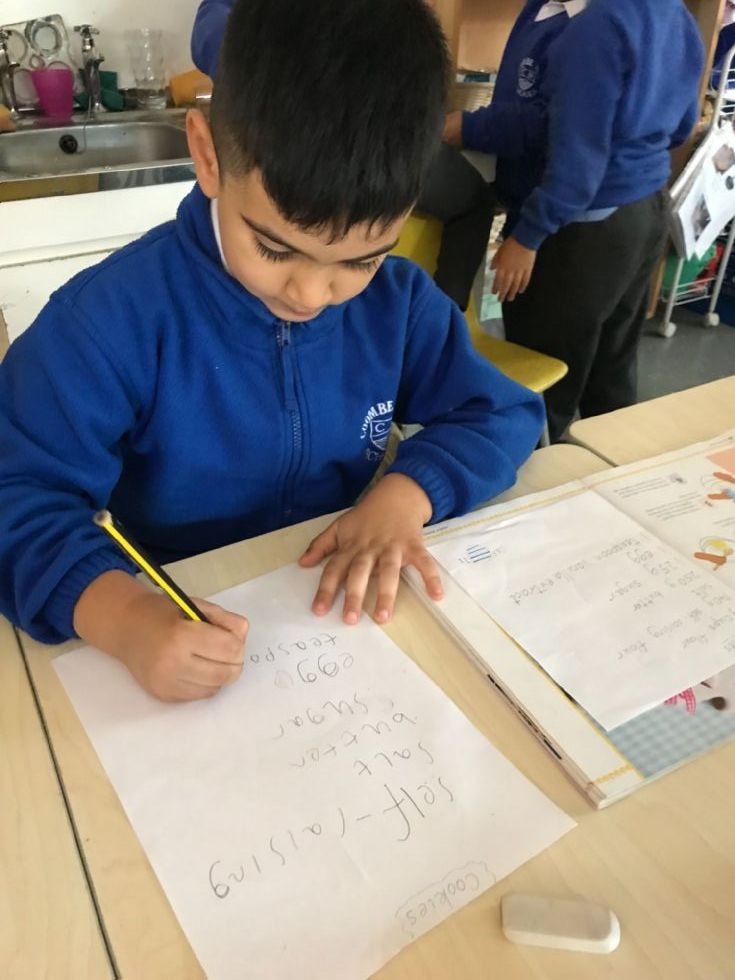
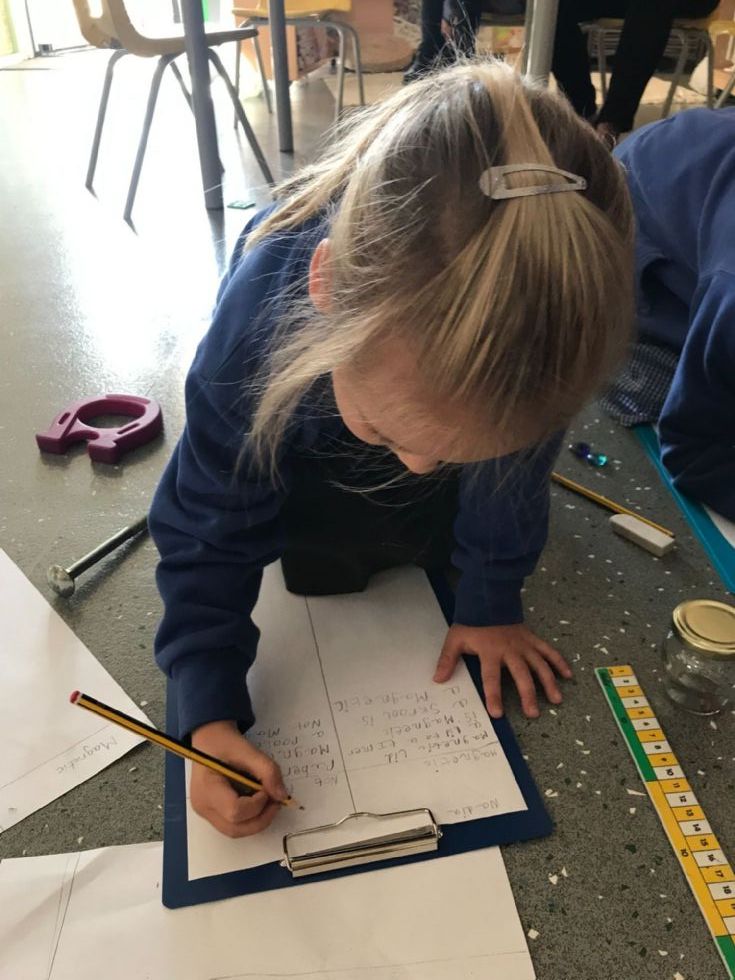
Writing is closely linked with the development of reading skills and is highly valued at Coombe Hill Infant School. Through our Power of Reading approach and carefully selected high quality, diverse texts, our children are inspired to write for a range of different purposes. Our staff agree that we are aiming for the same endpoint - children who have a passion for writing, are able to write clearly, accurately and coherently. At Coombe Hill Infants, we aim for our children to develop good handwriting, and use accurate spelling by applying the skills taught through our phonics scheme. Children are taught writing at our school through four different phases outline below.
Implementation
All staff have a clear and ambitious vision for providing high quality teaching of writing. Drawing on children's growing reading skills we:
- use a rigorous, sequential approach to teaching handwriting
- ensure children use and apply their phonic knowledge in their writing and use their segmenting fingers to support them with spelling
- ensure there are opportunities for writing in all areas of the curriculum
- ensure that the children write for a real purpose and reason
- teach the children how to proof-read and check their writing makes sense and then, in Year 2, how to make revisions and additions so they can improve
- expect the teacher’s own speaking, listening, writing and reading of English to support the development of children's language and vocabulary
The writing process
At Coombe Hill Infants we strive for all children to see themselves as writers and have a passion for writing. The writing process is taught through four phases:
- Phase 1: Immerse our children in our high quality texts and encourage each child to believe in themselves as authors. The children are taught background knowledge to understand the text and provided opportunities to explore the key vocabulary through drama and speaking and listening activities to connect pupils with the content.
- Phase 2: A grammatical skill is taught and demonstrated to the children through a model text. This is also an opportunity for children to practise each of the skills before independently applying them for the final piece.
- Phase 3: Teachers model the writing process through shared writing using the model text sentences as sentence stems to add their own content. Then, the children are provided with opportunities to practise writing both orally and written before independent application- pupils should be engaged in writing during the shared writing whole-class input e.g. on mini whiteboards practising sentences and sharing. Editing and improving is also modelled throughout this third phase.
- Phase 4: The final phase in the writing process is providing the children time to independently apply the skill through planning, drafting, editing and then publishing their work.
Impact
As a result of our carefully sequenced writing curriculum and our consistent whole-school approach, children at Coombe Hill Infant School become confident, capable and enthusiastic writers. They develop a deep understanding of how writing works and are able to apply their skills with increasing independence across a range of genres and subjects.
Children demonstrate:
Teachers regularly assess pupils’ writing through observation, discussion, independent work and targeted assessment tasks. These ongoing assessments inform planning and ensure that all children continue to make strong progress from their starting points.
By the end of Reception our aim is for all children to show increasing control of their fine motor skills, enabling them to form recognisable letters and early words. They are able to write short sentences that can be read by others, applying their phonics and using punctuation with growing accuracy. They demonstrate excitement and pride in their writing and are ready to build on these skills in Year 1.
By the end of Key Stage 1, our children see themselves as writers. They write with enjoyment and confidence, understand the craft of writing, and are equipped with the foundational skills they need for success in Key Stage 2.
- fluent handwriting and increasing accurate spelling as they apply their phonic knowledge.
- construction of clear, coherent and purposeful sentences.
- knowledge of writing in extended pieces that are well-structured and suited to different audiences and purposes.
- knowledge of high-quality texts, application of drama, discussion using explicit key vocabulary.
- the editing process and proof-reading strategies modelled by an adult.
Teachers regularly assess pupils’ writing through observation, discussion, independent work and targeted assessment tasks. These ongoing assessments inform planning and ensure that all children continue to make strong progress from their starting points.
-
By the end of Reception our aim is for all children to show increasing control of their fine motor skills, enabling them to form recognisable letters and early words. They are able to write short sentences that can be read by others, applying their phonics and using punctuation with growing accuracy. They demonstrate excitement and pride in their writing and are ready to build on these skills in Year 1.By the end of Key Stage 1, our children see themselves as writers. They write with enjoyment and confidence, understand the craft of writing, and are equipped with the foundational skills they need for success in Key Stage 2.Oracy in all subjectsOur curriculum design allows for as many speaking opportunities as possible as our teachers understand that speaking and listening are at the heart of language. Not only are they the foundations for reading and writing, they are also essential skills for thinking and communication. Our teachers are role models for good spoken English, using ambitious vocabulary and correct grammar. Children are encouraged to read aloud, discuss ideas with their peers and teachers, engage with and learn new vocabulary to extend their spoken and receptive vocabulary.
Useful Links